


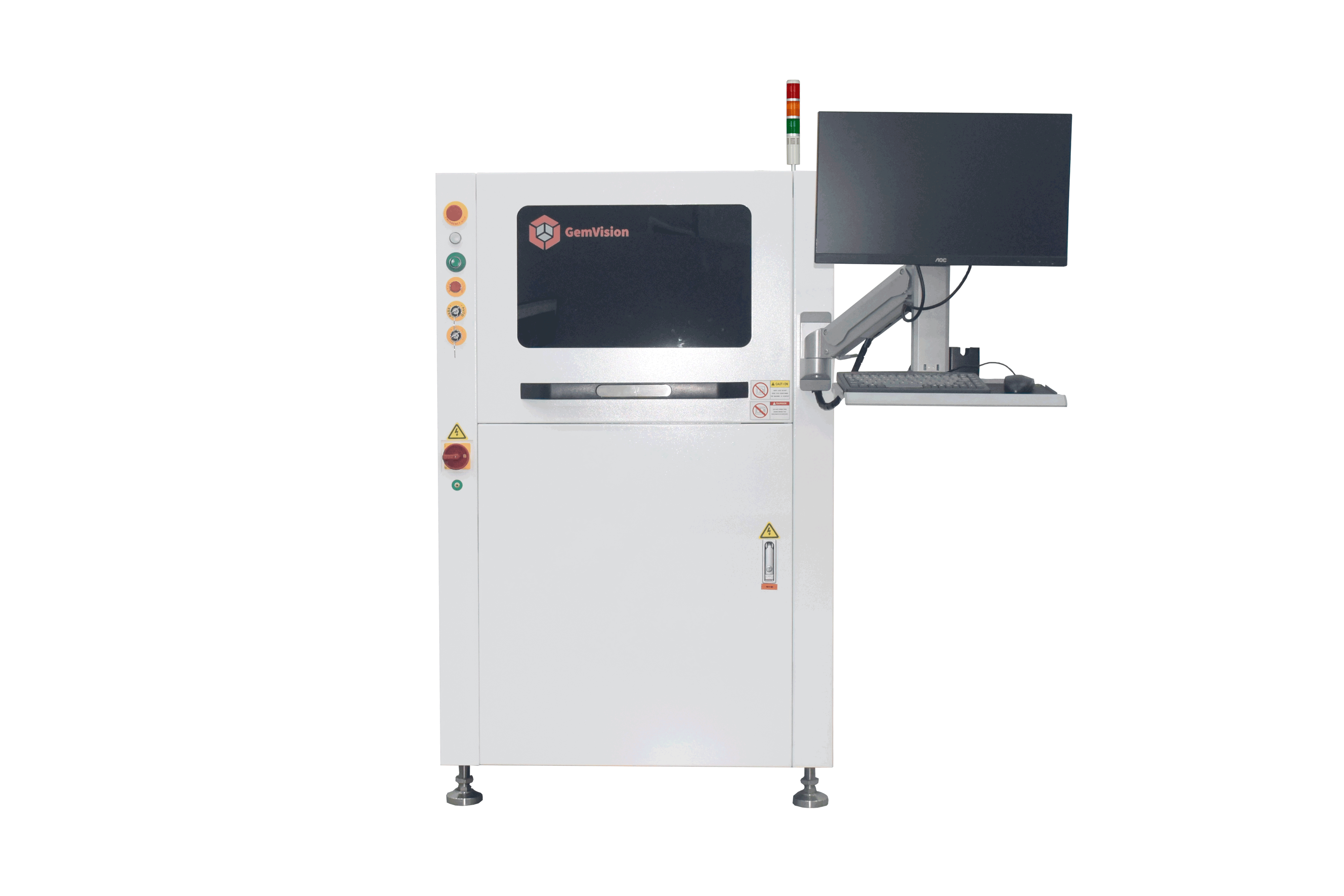
GS450
• Programmable Structured Grating PMP Imaging Technology [PATENTED]
• High and low exposure technology; D-Lighting [PATENTED]
• RGB Tune Active 2D Lighting Source [PATENTED]
• Multi-Head Optical Source Technology [PATENTED]
• High-resolution lmage Processing System
• 5 Minutes AI Programming and One-Click Operation
• MES Intelligent Manufacturing Access Capability
• Z-axis Dynamic Compensation+Telecentric Lens for Static Compensation
• Mark Detection, Detection of Moving Bad Marks, and Closed-loop Control
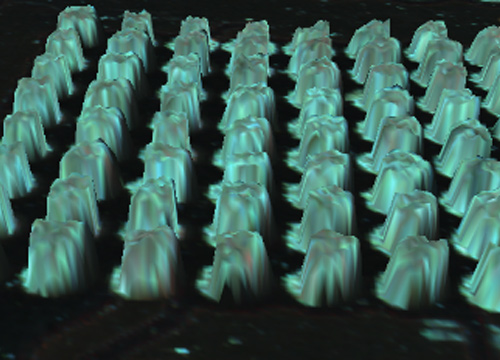
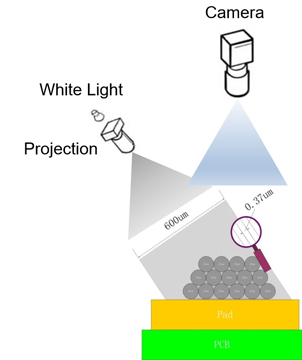
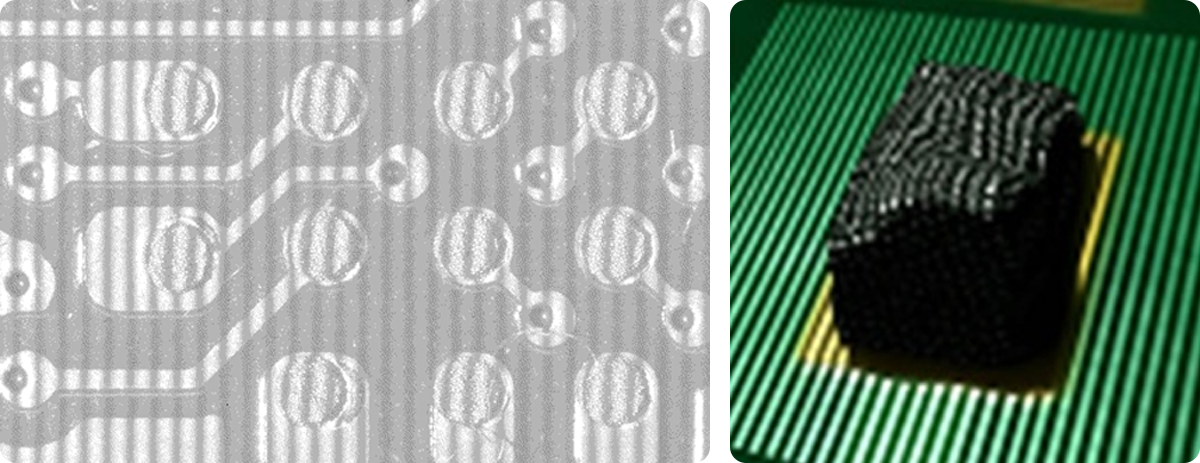
Phase modulation profilometry (PMP) is used to achieve 3Dmeasurement of precision printed solder paste, which greatlyimproves the measurement accuracy while ensuring high-speed measurement.
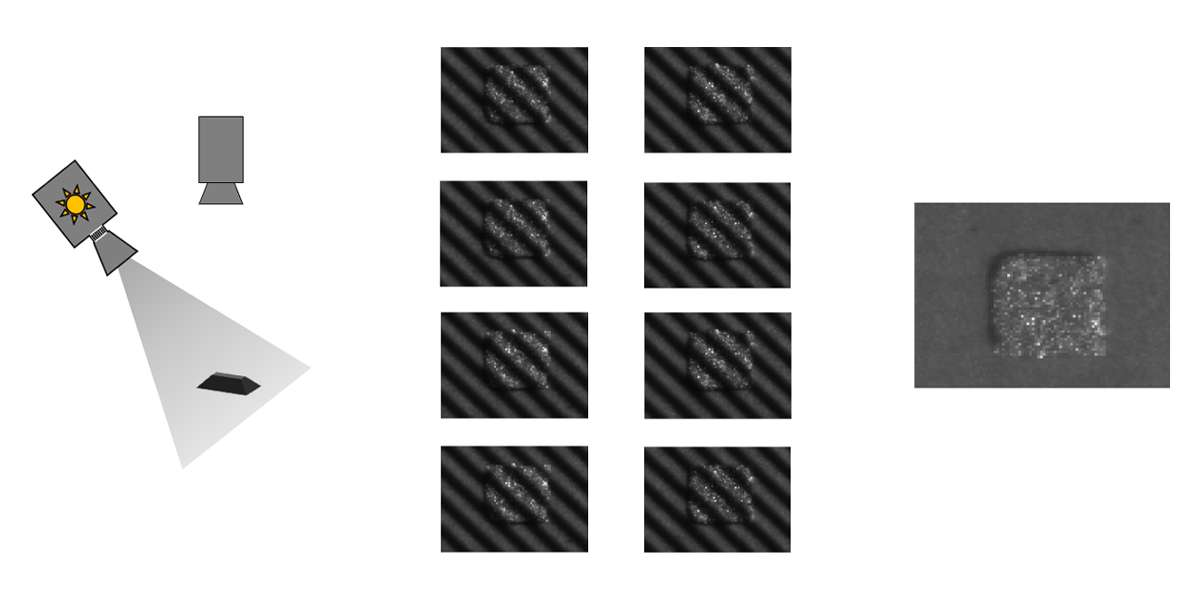
Phase modulation profilometry (PMP), also known as phaseshift profilometry (PSP), is a method based on sinusoidalstructure grating projection, discrete phase shift to obtainmultiple deformed light field images, and then calculate thephase distribution according to the multi-step phase shiftmethod, and finally use triangulation and other geometricmethods to obtain high-precision height, area, and volume measurement results.
Programmable structured grating PMP imaging technology (PSLM PMP) uses German PSLM components with internationalcutting-edge technology. [Ten-year free warranty]
The object under inspection is sampled 8 times to ensure the high repeatability and accuracy of the equipment detection.
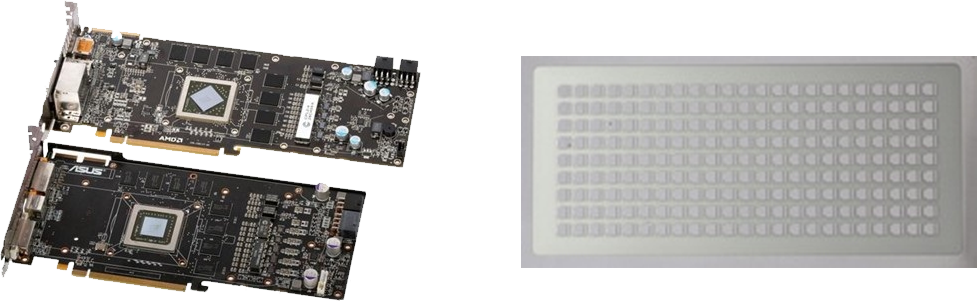
The white light source used by conventional SPI will not affect the color of the PCB, but for black (Dark PCB) and high brightness PCB boards (ceramic PCB), since the reflection degree of these two PCBs to the structured grating is different from that of ordinary PCBs, darker images will be displayed during imaging. Data accuracy is affected and false alarms will increase significantly.
The D-Lighting technology used by S-Tech uses 4 photos in a group of 8 sampled photos, using high exposure mode and low exposure mode respectively. In the setting software, you can choose black, normal, and high brightness options. Perfectly handle PCB boards with different reflectivity and different colors.
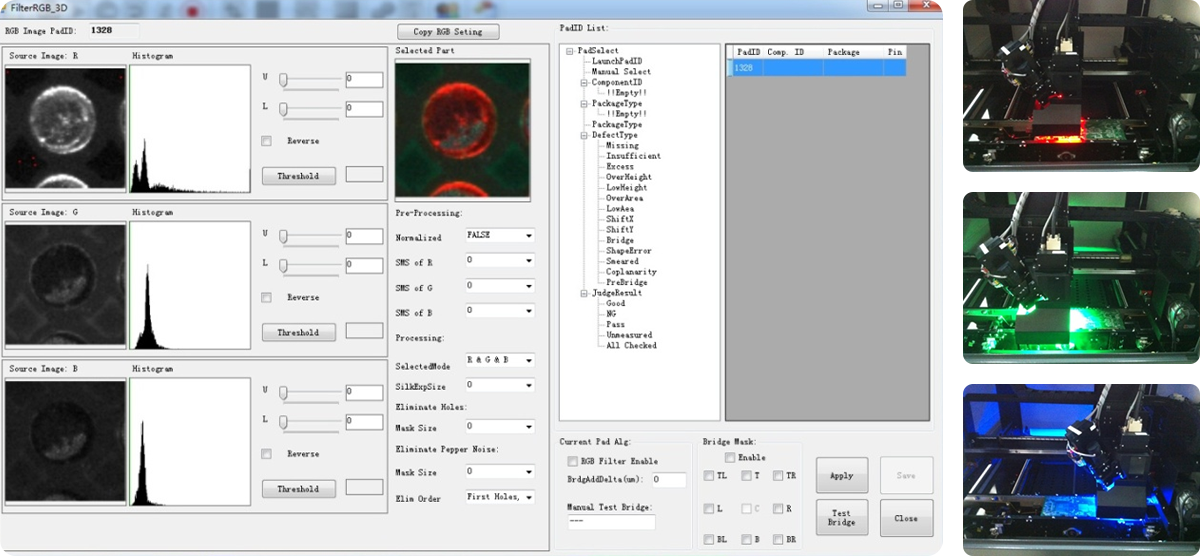
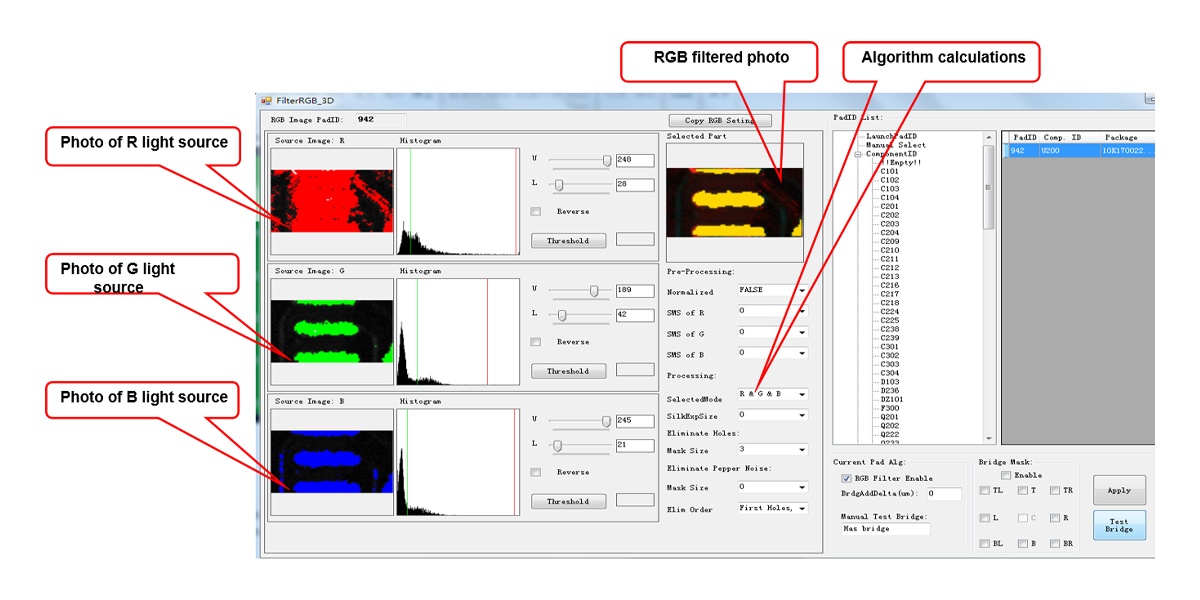
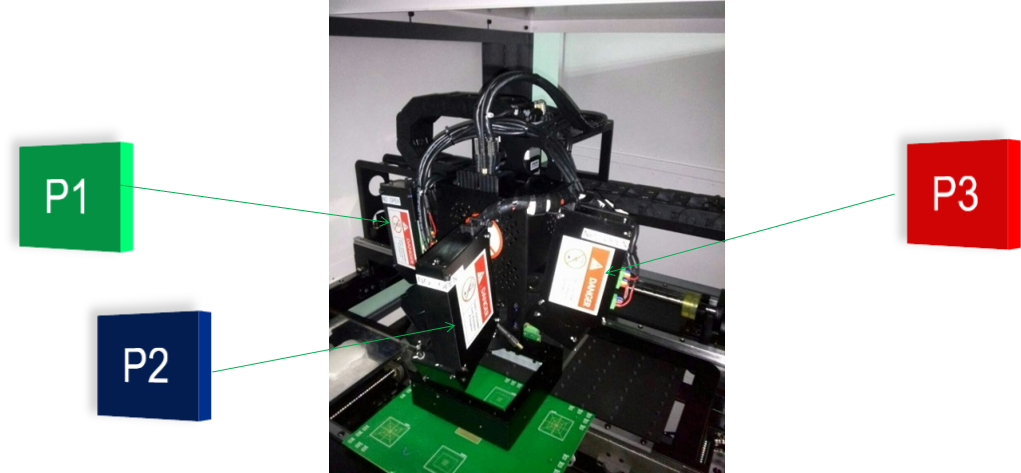
he unique Multi-Head optical source technology has obtained a national invention patent and uses 3 different colors of structured light to detect solder pastefrom different angles with an interval of 120°.
Flexible configuration to meet customer needs, optional single head, double head or multi-head.
Compared with the traditional white structured grating alternately taking pictures, Multi-Head can take pictures in multiple directions at the same time, which improves the detection speed.
| Technology Platform | Standard Type B/C |
|---|---|
| Series | GS |
| Model | GS450 |
| Measurement Principle | 3D white light PSLM PMP (Programmable Spatial Light Modulation, Phase Measurement Profilometry) |
| Measurements | Volume, Area, Height, XY Offset, Shape |
| Detection of Non-Performing Types | Missing print, Insufficient solder paste, Excessive solder paste, Bridging, Offset, Mal-shapes, Surface contamination, etc. |
| Camera Pixel | 5M(12M.19M,21M optional) |
| Lens Resolution | 3um/16um (4.5um - 20um optional) |
| XY Accuracy | ±10um |
| Repeatability | ≤1μm (4 Sigma); volume/area:<1%(4 Sigma) |
| Gage R&R | <10% |
| Inspection Speed | 0.35sec/FOV ~ 0.5sec/FOV (According to the actual configuration) |
| Quantity of Inspection Head | 1 (2.3 optional) |
| Mark-point Detection Time | 0.3sec/piece |
| Maximum Measuring Head | ±550um (±1200um optional) |
| Maximum Measuring Height of PCB Warp | ±5mm |
| Minimum Pad Spacing | 100μm (Pad height of 150 μm as reference); 80μm/100μm/150μm/200μm (Determined by actual configuration) |
| Minimum element | 01005(03015/008004 optional) |
| Maximum Loading PCB Size(X*Y) | 460x490mm(GS450) |
| Conveyor Setup | Front orbit (Back orbit optional) |
| PCB Transfer Direction | Left to right or Right to left |
| Conveyor Width Adjustment | Manual & Automatic |
| Engineering Statistics | Histogram;Xbar-R Chart;Xbar-S Chart;CP&CPK;%Gage Repartability Data;SPI Daily/Weekly/Monthly Reports |
| Gerber & CAD Data Import | Support Gerber format (274x,274d), Manual teaching model;CAD X/Y,Part No.,Package Type input |
| Operating System Support | Windows 10 loT Enterprise (64 bit) |
| Equipment Dimension and Weight | W1000xD1150xH1530,965Kg(GS450) |
| Optional | One person controls more machines, Network SPC (Software only), 1D/2D Barcode scanner, Offline programming software, UPS continuous power supply |